
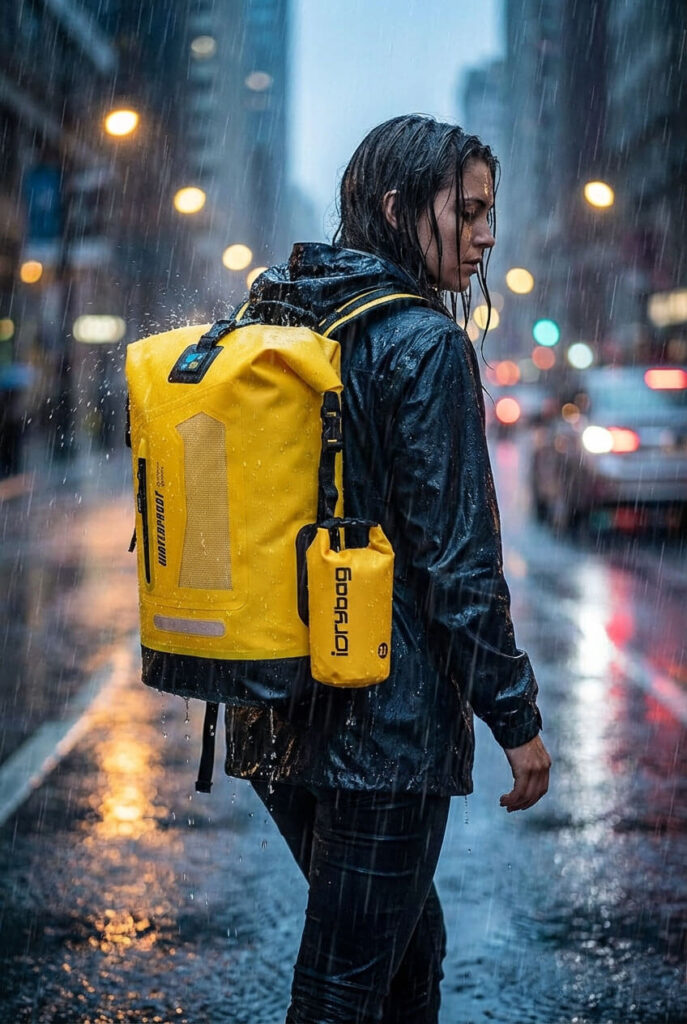
A lot of bags sold as waterproof are really just water-resistant backpacks with a rain cover. That matters. If you need true protection for kayaking, boating, fishing, or wet-weather riding, a roll-top dry bag backpack with welded seams is usually the safer bet. If you mostly walk, fly, or commute, comfort and organization may matter more than submersion-level sealing.
- Main winner: Earth Pak Waterproof Backpack stands out for balancing real dry-bag protection, better carry comfort, and more useful organization than most basic roll-top options.
- Best for simple water use on a tighter budget: Piscifun Dry Bag keeps things straightforward, floats, and costs far less than premium-heavy options.
- Biggest warning: Do not confuse “includes a rain cover” with a fully waterproof backpack. Those are very different levels of protection.
- Who should skip this category: Daily office commuters carrying a laptop and paperwork may be happier with a structured travel or commuter bag unless they regularly deal with heavy rain or open-water exposure.
Quick Picks: Best Waterproof Backpacks at a Glance
BestiPro may earn a commission from qualifying purchases made through links on this page, at no additional cost to you.
| Rank | Product | Best For | Key Advantage | Main Tradeoff | Buy Link |
|---|---|---|---|---|---|
| 1 | Earth Pak Waterproof Backpack | Mixed hiking, paddling, and travel use | Better comfort and storage than many dry bag backpacks | Bulkier than minimalist dry sacks | Check Amazon Price |
| 2 | Waterproof Backpack for Men 20L/30L/40L | Budget-minded kayaking and day trips | Floating dry-bag design with tough 500D PVC | Less refined storage than pricier rivals | Check Amazon Price |
| 3 | Cressi Ocelot Dry Bag | Beach, paddleboarding, and dive-day carry | Simple water-sports layout with handy front access pocket | More splash-focused than hard-expedition oriented | Check Amazon Price |
| 4 | Earth Pak Waterproof Dry Bag | People who want a classic dry bag first | Wide size range and easy packability | Smaller sizes are not true backpack carry | Check Amazon Price |
| 5 | MIYCOO Packable Backpack | Emergency travel backup and light day use | Very light, folds small, adds wet compartment storage | IPX4 splash resistance is not full waterproofing | Check Amazon Price |
What We Looked At When Comparing Waterproof Backpacks
This roundup is based on product specs, buyer feedback patterns, category benchmarks, and comparisons with similar dry bag backpacks, waterproof hiking backpacks, and waterproof travel backpack designs. Since these products don’t all serve the same job, the real question isn’t just which one is “best.” It’s which one stays dry in the way you actually need.
The criteria that mattered most here were seam construction, closure design, strap comfort, usable storage, weight, and whether a bag is built for full wet exposure or just ugly weather. A 100% waterproof backpack usually means welded seams plus a roll-top seal. A zippered hiking pack with a rain cover can still be useful, but it belongs in a different performance tier.
If you’re also weighing broader travel needs, our guides to best travel backpack picks and the best lightweight backpack for travel may help narrow whether you really need dry-bag construction or just solid rain resistance.
The Picks That Make the Most Sense
1. Earth Pak Waterproof Backpack — the most balanced true waterproof pick here

The strongest all-around choice in this list is the Earth Pak Waterproof Backpack because it doesn’t stop at dry-bag basics. Based on the listed specs, it adds the comfort upgrades and usable organization that many cheaper roll-top bags skip, which makes it easier to justify for people who want one bag for kayaking, travel, fishing, and rough-weather day trips.
Verdict: A smart fit for buyers who want a fully waterproof backpack with better carry comfort, not just a bare cylinder with straps.
- Best for: Mixed outdoor use, carry-on travel, boating days, and longer walks to the water
- Not ideal for: Minimalists who want the lightest possible dry sack or office users needing laptop-first organization
- Key details: Roll-top closure, cushioned back panel, contoured straps, sternum strap, waist belt, interior organization, splash-proof outer pocket
What separates it from nearby alternatives is the overall carry system. A waist belt and shaped harness sound mundane until the bag is actually loaded. That matters more than an extra D-ring or bonus phone case when you’re walking any real distance.
The tradeoff is that this is still a heavy-duty roll-top design. It won’t feel as quick to access as a regular commuter pack, and the exterior pocket is described as splash-proof rather than fully waterproof, so small valuables still belong inside the main sealed compartment.
Worth knowing: If you want a waterproof hiking backpack that can also work for trips, this is one of the few options here that looks thought through from a carrying-comfort standpoint, not just a sealing standpoint.
2. Waterproof Backpack for Men 20L/30L/40L — a value-minded dry bag with the right basics
This one takes the more traditional dry-bag route: 500D PVC, floating design, roll-top closure, and reinforced stress points. It doesn’t pretend to be elegant, but for kayaking, rafting, or messy-weather use, that’s not a bad thing.
Verdict: Good value if your priority is straightforward waterproof protection and you don’t need premium refinement.
- Best for: Budget-conscious buyers who still want a real dry bag backpack
- Not ideal for: Laptop commuting, neat internal organization, or people who hate PVC stiffness
- Key details: 20L/30L/40L sizing, 500D PVC, floating design, reflective strip, D-clips, ergonomic honeycomb carry system
Its biggest advantage over simpler dry sacks is the attempt at comfort and visibility features. The reflective strip is especially practical for early-morning launches or roadside use with a bike or motorcycle.
Where it falls short is polish. The storage setup sounds functional rather than refined, and like many roll top waterproof backpack designs, access is slower than a zipper-opening hiking pack.
3. Cressi Ocelot Dry Bag — better suited to beach and paddle days than heavy hauling
Cressi comes from the water-sports side of the market, and the Ocelot feels like it. The front zip pocket, D-rings, and simple tarpaulin body all make sense for beach gear, fins, towels, and smaller essentials that would otherwise disappear to the bottom of the bag.
Verdict: A practical pick for paddleboarding, beach trips, and dive-adjacent carry, though it doesn’t look as load-focused as the more harness-heavy options above.
- Best for: Paddleboarding, beach outings, swimming, and light boating use
- Not ideal for: Carrying heavier loads over longer distances or buyers who want the most structured back support
- Key details: 10L/20L/30L sizes, tarpaulin body, roll-down closure, front zip pocket, webbing loops, D-rings
The front pocket is a genuine convenience, but keep expectations realistic: that kind of pocket usually helps with access, not deep waterproof security. For phones, wallets, and keys, the sealed main compartment is still the safer call.
Before you buy: The 10L version uses a single strap rather than a two-strap backpack layout. If you specifically want backpack carry, the 20L and 30L versions make more sense.
4. Earth Pak Waterproof Dry Bag — the classic dry bag approach, with size flexibility
This is the simpler Earth Pak entry, and that distinction matters. It leans harder into being a lightweight travel-friendly dry bag that happens to scale up into backpack territory at larger sizes, rather than a comfort-forward backpack from the start.
Verdict: Best for people who want a proven dry-bag format and care more about waterproof storage than backpack ergonomics.
- Best for: Kayaking, beach trips, boating, cruise packing, and suitcase-friendly backup storage
- Not ideal for: Daily hiking with weight on your back, especially in smaller sizes
- Key details: 5L to 55L size range, roll-top closure, included IPX8 phone case, backpack straps on 30L/40L/55L, 5-year warranty note
The big appeal is flexibility. You can buy much smaller than most backpack-focused rivals or step up to a very large 55L if you need true bulk capacity. That makes it more adaptable than bags that lock you into one mid-size format.
The weakness is equally clear: the 10L and 20L versions are not really substitutes for a proper hiking-style waterproof backpack. They’re portable dry bags first.
5. MIYCOO Packable Backpack — useful travel backup, but not a true dry bag
Here’s where the category gets muddy. MIYCOO is sold as waterproof, but the listed IPX4 rating means splash resistance, not sealed protection. For many buyers that’s still enough. For boating, open spray, or accidental dunking, it isn’t.
Verdict: A handy waterproof commuting backpack alternative for light rain and travel overflow, but not the bag to trust like a submersible backpack.
- Best for: Packing in luggage as a spare daypack, city walking, theme parks, and light hikes
- Not ideal for: Kayaking, fishing, rafting, or anyone shopping specifically for a 100% waterproof backpack
- Key details: 35L capacity, foldable design, wet compartment, upgraded zippers, survival whistle, IPX4 splash rating
The wet compartment is actually helpful for separating damp clothes or swim gear, which gives it a more practical travel angle than most ultralight packables. It’s also the kind of bag that pairs naturally with best compression packing cubes if you want a collapsible overflow bag on trips.
Watch out: IPX4 is not full waterproofing. It means splashes and light rain, not sealed roll-top protection.
6. SUIKIHUM 20L Ultra Hiking-Daypack — only makes sense as a dirt-cheap emergency extra
This one is hard to place beside actual waterproof backpacks because it really isn’t one. The product description says water-repellent polyester with a foldable ultralight body. That can work for casual errands, an emergency summit layer carry, or an inexpensive backup bag stuffed into luggage. It is not the right answer for wet marine use.
Verdict: Buy it only if price and packability matter far more than structure, long-term durability, or serious water protection.
- Best for: Ultralight backup carry, occasional short walks, and cheap just-in-case travel use
- Not ideal for: Heavy loads, laptop carry, extended hikes, or anything requiring trustworthy waterproof performance
- Key details: 20L capacity, foldable build, polyester shell, breathable mesh straps, water-repellent coating
The price is the entire story here. At this level, you’re buying convenience, not confidence.
7. OSAH DRYPAK Waterproof Backpack — built for bigger, rougher loads
Once you move into 35L, 55L, and especially 85L capacity, the job changes. This OSAH DRYPAK looks aimed at buyers carrying bulkier gear for rafting, camping, longer fishing trips, or motorcycle travel where a basic small dry bag stops being enough.
Verdict: A strong candidate for buyers who want heavy-duty waterproof storage and don’t mind extra size or weight.
- Best for: Larger loads, overnighters, boat-heavy use, and rugged wet-weather hauling
- Not ideal for: Minimal daily commuting or anyone wanting a sleek waterproof laptop backpack
- Key details: 35L/55L/85L options, 500D PVC, high-frequency welded seams, roll-top closure, chest belt with whistle, bottle holders, bungee cords, reflective strip
The standout difference is capacity plus attachment utility. Side pockets, bungees, D-rings, and carabiner points make more sense when you’re hauling awkward gear, not just clothing and a towel.
The downside is predictable: big waterproof bags can feel overbuilt for casual use. If you mainly want something for commuting in rain, this is probably more bag than you need.
8. OSAH DRYPAK Waterproof Backpack Sack — nearly the same bag, so price matters most
This listing appears to mirror the previous OSAH DRYPAK very closely in design, specs, and intended use. In a case like this, the buying decision usually comes down to listing price, color availability, current seller reputation, and recent buyer feedback rather than product concept.
Verdict: If this is cheaper than the other OSAH listing when you check, it may be the smarter buy; if not, there isn’t much reason to force it.
- Best for: Shoppers comparing duplicate or near-duplicate waterproof pack listings
- Not ideal for: Anyone hoping this version solves a clear weakness in the other one
- Key details: 35L/55L/85L sizes, 500D PVC, welded seams, roll-top seal, chest belt, side mesh holders, front splash-resistant pocket, bungee storage
Practical note: When two listings are this close, compare current price, return terms, and the newest reviews before picking one. That will tell you more than the spec bullets will.
9. HEETA Dry Bag — easy to spot, easy to grab, but size choice is everything
The transparent body is the whole point here, and for beach, pool, paddleboard, or cruise use, that’s genuinely useful. You can see where your towel, sunscreen, or phone pouch is instead of digging through a dark tube.
Verdict: A good casual-water option if convenience matters more than back-panel comfort or long-distance carry support.
- Best for: Beach days, short kayaking sessions, swimming trips, and quick-access wet environments
- Not ideal for: Buyers expecting the listed 5L version to work like a normal backpack, or anyone carrying heavy gear for hours
- Key details: Transparent PVC body, seamless construction, adjustable straps, side handle, 5L/10L/20L/30L/40L sizes, included phone case
It’s also more honest than some listings: it notes the bag can handle accidental submersion but shouldn’t stay underwater for long periods. That nuance is worth paying attention to.
The caution is simple. The specific product data provided here points to the 5L version, and 5L is tiny. Fine for essentials, not for someone searching “waterproof backpack” expecting room for layers, shoes, and a full day’s gear.
10. Maelstrom Hiking Backpack 40L — useful in rain, but not in the same class as dry bags
Some buyers don’t really want a PVC roll-top cylinder. They want a normal hiking pack with compartments, waist pockets, hydration compatibility, and a shape that works on the trail. That’s where the Maelstrom makes more sense.
Verdict: A better pick for organized hiking in wet weather than for true on-water use.
- Best for: Hiking, travel, and long walks where organization and trail comfort outrank full waterproof sealing
- Not ideal for: Kayaking, fishing from open boats, rafting, or situations where the bag could be heavily soaked
- Key details: 40L size, rip-stop 210D nylon, rain cover, multiple zip compartments, waist pockets, hydration sleeve setup, whistle buckle
The strong point is usability. This bag gives you the everyday pocketing and separation many waterproof dry bags completely lack. If you’re comparing it to a roll-top bag, the question is really whether you want easier access or better sealing.
The catch: this is water-resistant plus rain-cover protection, not a welded-seam waterproof backpack. For students or commuters, our roundups of the best backpacks for college and best travel backpack options may be more relevant if full dry-bag performance isn’t essential.
11. Piscifun Dry Bag — one of the easiest budget buys for fishing and boating
Piscifun keeps this simple in the right way. You get 500D PVC, a fully welded seal, floating behavior once rolled and buckled, and a waterproof phone case. For anglers, paddlers, and boaters who just want dependable dry storage without overspending, that formula works.
Verdict: Probably the best low-cost entry point here for real water use, especially if you don’t need fancy organization.
- Best for: Fishing, boating, beach use, and casual kayaking on a budget
- Not ideal for: Buyers wanting cushioned support, a refined back panel, or commuter-friendly access
- Key details: 10L/20L/30L/40L sizes, 500D PVC, welded seal, floating design, adjustable straps, mesh exterior pocket, included IPX8 phone case
Compared with Earth Pak, the main difference is comfort and polish. Compared with very cheap foldable packs, the difference is much more important: this is actually built for wet use.
Good fit if: You’d rather buy a straightforward dry bag backpack now than pay extra for features you may never care about.
What Actually Changes the Buying Decision
The biggest mistake in this category is shopping by the word “waterproof” alone. Plenty of bags survive a drizzle. Far fewer are built to protect gear around spray, boat decks, soaked docks, or accidental drops in shallow water.
- Start with the environment. For kayaking, fishing, rafting, or paddleboarding, choose welded seams and a roll-top closure. For urban commuting, a structured water-resistant bag may be easier to live with.
- Don’t overpay for capacity you won’t use. A 35L to 55L waterproof backpack is useful for clothing, towels, and bulkier gear. It can also feel clumsy on a short beach walk. Small and medium sizes are often the sweet spot.
- Comfort matters more as volume goes up. Once the bag is large enough to hold shoes, layers, camera gear, or fishing tackle, shoulder design and back padding become more important than a bonus phone case.
- Pockets are often the weak point. External zip pockets on dry bags are usually convenience storage, not the safest spot for valuables. Put electronics and anything irreplaceable inside the sealed main chamber.
- PVC versus lighter fabrics is a real tradeoff. PVC-heavy dry bags tend to offer more confidence around water, but they’re stiffer, less breathable, and not always pleasant for everyday carry.
- For travel, think beyond waterproofing. If the bag will spend more time in airports than on boats, it may be smarter to combine a lighter trip bag with one of the best personal item bag options or a more structured travel pack.
Rule of thumb: if your trip includes real water exposure, buy for sealing first. If it mostly includes sidewalks, terminals, and short rain, buy for access and comfort first.
Questions Buyers Usually Have
Are roll-top bags always better than zippered waterproof backpacks?
For keeping gear dry, usually yes. A roll-top seal with welded seams is still the safer format for boating, kayaking, and heavy wet exposure. Zippered packs are often easier to organize, but unless the zipper system is truly waterproof and the seams are sealed, protection is typically lower.
Can I use a waterproof backpack for a laptop?
Yes, but only if you’re realistic about structure. A dry bag backpack can keep a laptop dry, yet many don’t have a suspended sleeve or much impact protection. If your priority is commuting with electronics, a dedicated waterproof laptop backpack or a padded sleeve inside the main compartment is the better move.
Do waterproof backpacks float?
Some do when rolled and buckled with air trapped inside, including several dry bag styles in this list. That said, floating is not guaranteed with every load. A heavily packed bag with dense gear may behave differently than one carrying clothes and towels.
What size waterproof backpack is best for day trips?
For most buyers, 20L to 30L is the most versatile range. It’s enough for a towel, spare clothes, snacks, and a few extras without getting awkward. Smaller 5L and 10L bags are better for essentials-only outings.
Is a rain cover enough for hiking in bad weather?
It depends mostly on the kind of weather and how exposed your gear will be. A rain cover is fine for many hikes in ordinary rain. It is not the same thing as a fully waterproof backpack if the bag could sit on wet ground, get splashed repeatedly, or take on water from multiple angles.
Are transparent dry bags worth it?
They can be, especially for beach and paddle use where fast access matters. Being able to spot sunscreen, a towel, or a phone pouch quickly is genuinely convenient. For heavier or rougher use, many buyers will still prefer a more structured opaque bag with better harness support.
Where We’d Lean
If you want the best waterproof backpack here for broad use, the Earth Pak Waterproof Backpack is the one I’d lean toward. It does the hard part well, keeping gear dry, while also making daily carry less of a chore than many simpler dry sacks.
For a lower-cost water-first option, Piscifun Dry Bag makes a lot of sense. It gives up some comfort and polish, but not the core purpose.
The mistake to avoid is simple: buying a rain-resistant hiking pack when you actually need a true dry bag backpack. That mismatch is where most disappointment in this category starts.
BestiPro compares bags by use case, construction details, carrying practicality, and buyer-risk tradeoffs rather than spec-sheet hype alone. For waterproof backpacks, that means looking closely at closure design, seam type, load comfort, and whether a bag is really built for wet exposure or just ordinary rain.
Affiliate disclosure: BestiPro may earn a commission when you buy through links on this page. This does not change the price you pay or the editorial criteria used in this guide.