
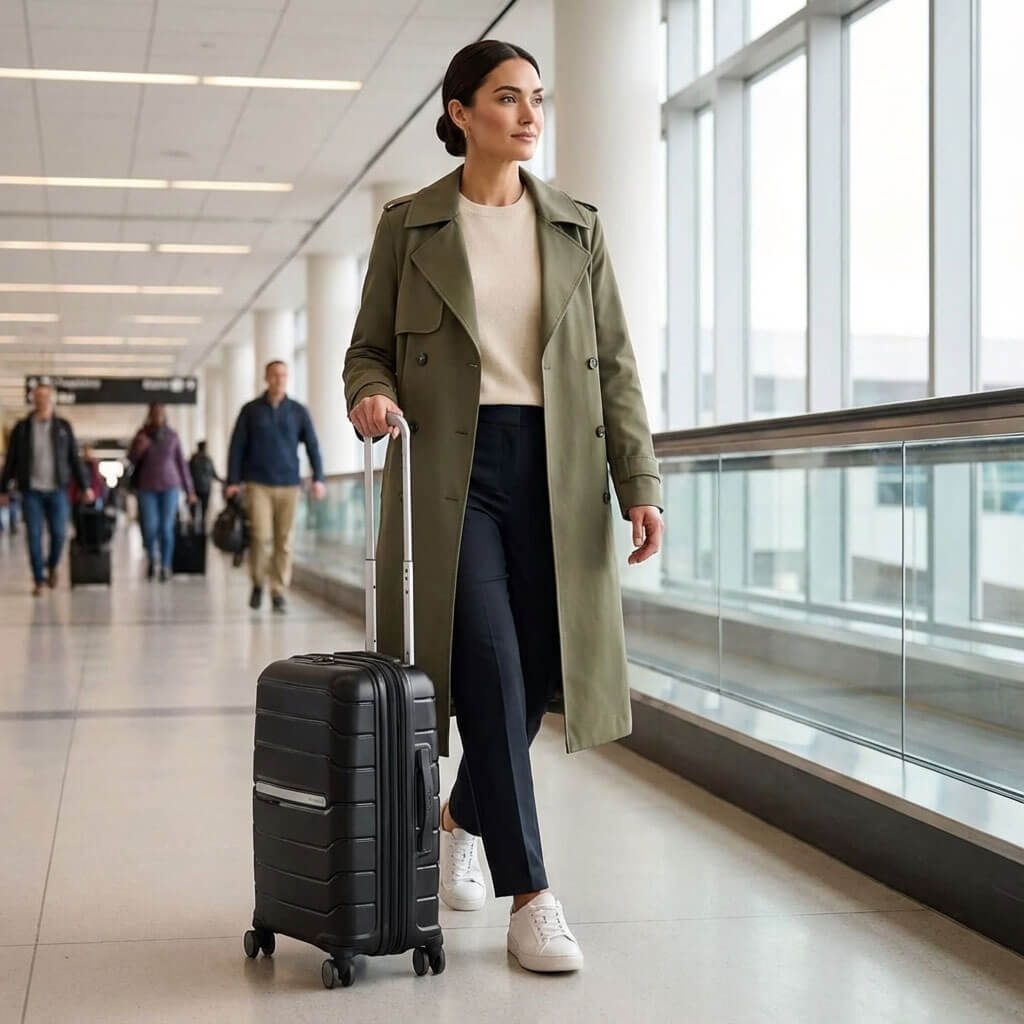
The best carry on luggage in 2026 is not always the biggest roller that claims to fit overhead. The smarter choice is the bag that matches your airline habits, packing style, and tolerance for weight, scratches, and tight bin space. Based on product specs, buyer feedback patterns, category benchmarks, and comparable models, the Samsonite Omni PC stands out as the safest all-around hardside carry-on here, while the Osprey Daylite 26+6 is the more flexible pick for travelers trying to avoid overhead-bin battles altogether.
One warning before the list: a few bags marketed near this category are either true checked luggage or borderline carry-on dimensions. Always compare the full outside dimensions, including wheels and handles, against your airline’s rules. That matters more than the printed “20-inch” or “22-inch” label.
- Main winner: Samsonite Omni PC is the most balanced carry-on here thanks to polycarbonate construction, a TSA lock, 6.81 lb weight, and a strong warranty.
- Best for avoiding overhead stress: Osprey Daylite 26+6 works as a personal-item-style travel pack for many airlines and stays useful after landing.
- Biggest buying warning: the Amazon Basics 30-inch case is not carry-on luggage; it is a checked suitcase despite appearing in this product set.
- Skip a spinner suitcase if: you mainly fly strict budget airlines, walk long distances over rough streets, or need something that fits under the seat.
For a more style-specific comparison, BestiPro also has a separate guide to Carry-On Bags for Women, but the picks here focus on broader cabin luggage decisions: hard shell versus soft shell, 20 inch carry on luggage versus 22 inch carry on luggage, and when an underseat carry on bag makes more sense than a full roller.
- Quick Picks Table
- How We Compared These Bags
- Carry-On Luggage Reviews
- What Actually Matters Before You Buy
- Carry-On Questions Buyers Actually Ask
- The Cleanest Choice
Best Carry On Luggage 2026: Quick Comparison
| Rank | Product | Best For | Price Range | Buy Link |
|---|---|---|---|---|
| 1 | Amazon Basics 30″ Hardside Large Checked Luggage | Long trips when checking a bag | Around $110 | Check Amazon Price |
| 2 | Wrangler Hardside Spinner 20-Inch | Budget domestic flyers | Around $50 | Check Amazon Price |
| 3 | Samsonite Omni PC Carry-On 20-Inch | Most frequent carry-on travelers | Around $109 | Check Amazon Price |
| 4 | Samsonite Freeform Hardside Carry-On | Travelers wanting a roomier Samsonite feel | Around $154 | Check Amazon Price |
| 5 | Sweetcrispy 20-Inch Hardside Carry-On | Cheap carry-on luggage with lock included | Around $51 | Check Amazon Price |
How We Read the Carry-On Claims That Actually Matter
This is a research-based comparison, not a lab-test roundup. We looked at the details that tend to separate top rated carry on luggage from bags that only look good in product photos: full carry on suitcase dimensions, shell material, wheel design, zipper and lock setup, expansion behavior, interior layout, listed weight, and warranty support.
For hardside carry-ons, polycarbonate generally earns more confidence than basic ABS because it tends to flex better under impact. ABS still has a place in cheap carry on luggage, especially for occasional trips, but it should not be judged the same way as a more expensive polycarbonate carry on. Spinner wheels also matter, but four-wheel smoothness is not the whole story; small exposed wheels can be vulnerable on curbs, train platforms, and rough sidewalks.
We also gave extra attention to real airline practicality. A bag that expands beautifully at home can become a problem at the gate. For strict international travel, a compact pack or underseat option may beat a larger 22 inch carry on suitcase, especially if you often connect through airports with smaller overhead bins. Pairing a roller with a travel day backpack can be smarter than forcing every item into one overstuffed suitcase.
The Carry-On Luggage Reviews, in Product Order
1. Basics 30″ Hardside Large Checked Luggage: Useful Carry-On Luggage Alternative, But Not Cabin-Size

Verdict: This is a roomy checked suitcase, not a carry-on. Its 30.7-inch overall height puts it well outside standard overhead bin luggage limits, so it only belongs on this list as a clear caution for shoppers comparing Amazon listings quickly.
- Best for: two- to three-week trips, family packing overflow, or travelers who already plan to check a bag.
- Not ideal for: anyone searching for airline approved carry on luggage.
- Key specs: 20.7 x 12.6 x 30.7 inches including wheels, expandable up to 15%, hard shell, four multi-directional wheels.
The appeal is obvious: lots of room, a scratch-resistant finish, an interior divider, and zippered pockets for organizing a longer trip. The problem is category fit. Calling this a carry-on would set buyers up for an expensive gate-check or a flat refusal from the airline.
Before you buy: choose this only if you want checked luggage. If you like the metal-shell look and want something more cabin-focused, compare BestiPro’s guide to aluminum luggage before committing to a large hardside case.
Strengths: big capacity, expandable layout, simple interior organization, low price for a large suitcase.
Weaknesses: not carry-on compliant, bulky to store, and unnecessary for short trips.
Practical buying note: it makes sense as a checked companion to a smaller carry-on, not as your main cabin bag.
2. Wrangler Hardside Spinner 20-Inch: Budget Carry-On Luggage With Real Limits
Verdict: The Wrangler is a low-cost 20 inch carry on luggage pick for travelers who fly occasionally and want spinner wheels without paying Samsonite money.
Its ABS hard shell, 360-degree spinner wheels, lined interior, compression straps, and top handle cover the basics. For weekend trips, college visits, or a few domestic flights a year, that may be enough. The tradeoff is refinement: budget ABS luggage usually feels less forgiving over years of heavy handling than polycarbonate or polypropylene alternatives.
- Best for: occasional domestic travel, short trips, and buyers trying to stay around $50.
- Not ideal for: frequent flyers who punish wheels and zippers every month.
- Key specs: 20-inch carry-on, ABS shell, four spinner wheels, fully lined interior, compression straps.
Strengths: affordable, easy to roll, lightweight enough for overhead lifting, and likely to meet most carry-on standards including budget airlines.
Weaknesses: fewer premium durability signals, no listed TSA lock, and basic interior organization.
Practical buying note: buy it for price, not lifetime performance. It is a sensible cheap carry on luggage option, but not the bag to choose for constant work travel.
3. Samsonite Omni PC Carry-On 20-Inch: The Safest All-Around Carry-On Luggage in Hardside
Verdict: Among the true carry-on rollers here, the Samsonite Omni PC makes the strongest overall case. It combines a polycarbonate shell, 6.81 lb listed weight, 22 x 15 x 9.75 inch overall dimensions, TSA side lock, four spinner wheels, and a 10-year limited warranty.
The micro-diamond texture is not just cosmetic. Hardside carry-ons pick up scuffs quickly, and a textured polycarbonate shell tends to hide wear better than glossy budget ABS. The Omni PC is still a conventional clamshell suitcase, so business travelers who need quick laptop access may prefer the LEVEL8 Grace or LUGGEX underseat bag. For clothing-first travel, though, this is the cleanest balance of durability, weight, and brand support.
- Best for: frequent domestic travelers who want a dependable hard shell carry on luggage option.
- Not ideal for: travelers who need an exterior laptop pocket or softside flexibility.
- Key specs: 19 x 14.5 x 9.75 inch packing dimensions, 22 x 15 x 9.75 inch overall dimensions, 6.81 lb, polycarbonate shell, TSA lock, 10-year warranty.
Strengths: better shell material than most budget cases, useful lock, scratch-resistant texture, proven brand positioning.
Weaknesses: no front access, not the cheapest option, and the 15-inch width may be worth checking against stricter international rules.
Practical buying note: this is the one we would start with if you want one best carry on suitcase for repeated domestic flights.
4. Samsonite Freeform Hardside Carry-On: Roomy Carry-On Luggage With Slightly More Size Anxiety
Verdict: The Freeform is appealing if you like Samsonite but want a more modern, expandable hardshell suitcase. The catch is its listed 23-inch overall height with wheels, which may be less reassuring than more compact 20-inch designs.
- Best for: travelers who want a structured, expandable Samsonite for domestic routes.
- Not ideal for: strict international itineraries or anyone who worries about gate sizing.
- Key specs: 15 x 10 x 23 inches with wheels, 20.5 x 14.5 x 10 inch interior, scratch-resistant exterior, divider, pouch, elastic straps.
The interior setup is practical for people who pack folded clothing and want each side of the clamshell held in place. It is not the most nimble pick for travelers who board late or regularly fly regional jets, but it offers a little more breathing room than tighter minimalist cases.
Strengths: organized interior, expandable hard shell, established luggage brand, smooth rolling design.
Weaknesses: larger listed overall height, no quick-access laptop panel, and a higher price than the Omni PC at the time of review.
Practical buying note: choose this over the Omni PC mainly if the interior layout and extra room matter more than maximum carry on size caution.
5. Sweetcrispy 20-Inch Hardside Carry-On: Feature-Heavy Carry-On Luggage on a Budget
Verdict: Sweetcrispy packs a surprising feature list into a budget suitcase: double spinner wheels, expandable storage, wet and dry mesh areas, X straps, a TSA-approved lock, and an adjustable telescopic handle.
That makes it tempting for buyers who want the look and convenience of more expensive hardside carry-ons without the price. The reasonable hesitation is brand depth. When a low-priced suitcase includes this many features, the long-term question is usually wheel, zipper, and handle consistency rather than the first-trip experience.
- Best for: budget travelers who want a TSA lock and expansion without spending much.
- Not ideal for: heavy business travel or rough international routes.
- Key specs: 20-inch ABS hard shell, double spinner wheels, expandable storage, TSA lock, mesh compartments, telescopic handle.
Strengths: strong feature-to-price ratio, lightweight ABS shell, organized interior, built-in lock.
Weaknesses: less established durability reputation, ABS construction, and premium claims should be treated with caution at this price.
Practical buying note: a good deal for light use, but do not overpack it and expect premium suitcase behavior.
6. BAGSMART 22x14x9 Carry-On — The Spec-Savvy Middle Ground
Verdict: BAGSMART is one of the more thoughtfully specified options here. It uses a 100% PC shell, lists 19 x 14 x 9 inches with spinner wheels and handle, weighs 6.83 lb, expands from 35L to 42L, and includes a side-mounted TSA lock.
That combination gives it a strong argument for travelers who care about airline-approved carry on dimensions but still want a little extra capacity. The important detail is the expansion zipper: opening it adds 1.6 inches and can move the bag from comfortably compliant to questionable on stricter carriers.
- Best for: travelers who want lightweight carry on luggage with better material specs than basic ABS.
- Not ideal for: chronic overpackers flying strict international routes.
- Key specs: 19 x 14 x 9 inches listed, 6.83 lb, 35L to 42L, 100% PC shell, four-level aluminum handle, TSA lock, 5-year warranty.
Strengths: polycarbonate construction, useful volume range, quiet spinner wheel claims, solid warranty for the price.
Weaknesses: expansion can compromise fit, and the brand lacks the same long luggage history as Samsonite.
Practical buying note: use the expansion for road trips, train travel, or the return leg when you are willing to gate-check if needed.
7. Travelers Club Chicago 22″ Carry-On — Better When You Want the Matching Set
Verdict: The Chicago is less about premium materials and more about flexible buying. You can buy the 22-inch expandable carry-on alone or as part of a coordinated set with a boarding tote and travel kit.
- Best for: shoppers building a matching luggage setup on a modest budget.
- Not ideal for: travelers who want the most durable standalone carry-on in this price class.
- Key specs: 22-inch expandable ABS hardside, 360-degree spinner wheels, telescoping handle, optional 3-piece and 5-piece sets.
As a single suitcase, it competes with Wrangler, Rockland, and Travelers Club Richmond. Its biggest difference is the accessory ecosystem. The 15-inch boarding tote with add-a-bag sleeve can be useful if you like separating personal items from clothing, though set buyers should still avoid overloading every piece just because it matches.
Strengths: expandable shell, coordinated set options, easy spinner movement, accessible price.
Weaknesses: ABS durability ceiling, fewer premium features, and a 22-inch label that still needs airline-by-airline checking.
Practical buying note: it makes the most sense as part of a set; as a standalone carry-on, several alternatives offer sharper individual advantages.
8. Osprey Daylite Expandable 26+6 Travel Pack — The Best Non-Roller for Light, Fast Travel
Verdict: The Osprey Daylite 26+6 is not a suitcase, and that is exactly why it belongs in the conversation. At 16.9 x 13 x 6.3 inches and 1.85 lb, it can work as an international personal item on many airlines while expanding by 6 liters when you need more room.
This is the right call when wheels are more nuisance than benefit: stairs, cobblestones, packed buses, budget airline boarding, or trips where you will walk straight from the airport into the city. The AirScape backpanel, tech sleeve, water bottle pockets, front zip pocket, and luggage pass-through make it more versatile than a plain backpack. If you want an even smaller secondary bag, a packable backpack can cover day trips without taking much suitcase space.
- Best for: minimalist travelers, international budget flights, and short trips where underseat storage matters.
- Not ideal for: travelers with back or shoulder issues, formal clothing, or heavy loads.
- Key specs: 16.9 x 13 x 6.3 inches, 1.85 lb, 26L expandable to 32L, tech sleeve, luggage pass-through, two bottle pockets.
Strengths: very light, flexible sizing, comfortable carry system, useful after arrival, easier on tight airline rules than many rollers.
Weaknesses: no wheels, less crush protection, and packing discipline is required.
Practical buying note: this is the smartest pick here for travelers who would rather board calmly than fight for overhead bin space.
9. Traveler’s Choice Pagosa 22-Inch: Best Carry-On Luggage for Rougher Handling
Verdict: The Pagosa is interesting because it uses polypropylene rather than standard ABS. That gives it a stronger durability angle for buyers worried about impact, abrasion, scratches, and wet conditions.
- Best for: travelers who want a more resilient hardside carry-on without jumping to luxury carry on luggage prices.
- Not ideal for: strict size environments where every inch counts.
- Key specs: 22-inch carry-on, polypropylene hardshell, 2-inch expansion gusset, spinner wheels, TSA combo lock, #10 self-mending zippers, multiple carry handles.
The bottom rubber handle is a small but useful detail. Lifting a suitcase from car trunks, shuttle racks, and overhead bins is easier when you have more than just a top and side grip. The #10 zipper callout also matters because zipper failure is one of the most annoying luggage problems.
Strengths: durable shell material, stronger zipper spec, expansion, multiple handles, TSA lock.
Weaknesses: a bulkier profile than compact 20-inch cases, and expansion can make carry-on compliance less certain.
Practical buying note: choose this over a budget ABS case if durability matters more than shaving every ounce.
10. Rockland Melbourne 20-Inch — Cheap, Light, and Best Kept to Occasional Use
Verdict: The Melbourne is one of the least expensive rolling carry on bag options here, with listed dimensions of 22 x 13.5 x 9 inches including wheels and compatibility claims for major U.S. airlines.
It uses lightweight ABS, multi-directional double spinner wheels, an aluminum telescoping handle, and a simple interior with mesh and elastic pockets. That is a practical feature set for the price. It is not the suitcase to romanticize, though. Low-cost spinner luggage tends to reveal its compromises in wheel tracking, handle stiffness, and zipper feel over time.
- Best for: occasional travelers, students, and anyone buying a backup carry-on under tight budget pressure.
- Not ideal for: weekly flyers or travelers who often roll over rough pavement.
- Key specs: 22 x 13.5 x 9 inches with wheels, ABS shell, double spinner wheels, telescoping handle, interior mesh zip pocket.
Strengths: very low price, lightweight design, airline-size-conscious dimensions, simple packing layout.
Weaknesses: budget construction, limited premium organization, and lower confidence for heavy travel cycles.
Practical buying note: worth considering for a few trips a year; less convincing as your only suitcase for constant travel.
11. Rockland London 20-Inch — Similar Budget Build, But Watch the Depth
Verdict: The Rockland London follows the same value-first logic as the Melbourne but lists a 22 x 13.5 x 10 inch size with wheels. That extra inch of depth can be useful for packing and risky for strict carry-on sizers.
- Best for: budget shoppers who want a slightly deeper hardside roller for domestic trips.
- Not ideal for: strict international travel or airlines enforcing 9-inch depth limits.
- Key specs: 22 x 13.5 x 10 inches with wheels, ABS shell, double spinner wheels, chrome telescoping handle, interior mesh pocket and clothing straps.
The champagne finish gives it a more polished look than the price suggests, but the real buying decision is size tolerance. A 10-inch depth may be fine on many domestic routes, especially if the shell is not overstuffed. On stricter carriers, it can become the difference between smooth boarding and a gate-check conversation.
Strengths: inexpensive, lightweight, easy to roll, decent internal restraint for clothing.
Weaknesses: depth is not ideal for every airline, ABS durability is basic, and there is no listed TSA lock.
Practical buying note: pick the Melbourne over this if you want the safer size profile; pick the London if you value the extra packing depth more.
12. Kenneth Cole REACTION Out of Bounds: Lightweight Carry-On Luggage With Better Corner Protection
Verdict: This Kenneth Cole REACTION carry-on is a cleaner middle option for travelers who want something light, structured, and less bare-bones than the cheapest ABS rollers.
At 21.75 x 14.5 x 8.5 inches and 6 lb, it has a reassuringly lean profile. Molded corner guards help address one of the obvious weak points on hardside luggage, and the dual-sided packing layout works well for separating outfits, shoes, and smaller accessories. The shell is ABS and PC rather than full polycarbonate, so it sits below the Omni PC or BAGSMART in material confidence.
- Best for: travelers who prioritize low weight and easy overhead lifting.
- Not ideal for: buyers who want built-in locks, laptop access, or premium shell materials.
- Key specs: 21.75 x 14.5 x 8.5 inches, 6 lb, ABS/PC shell, molded corner guards, 4-wheel spinners, limited lifetime warranty.
Strengths: light, slim depth, corner protection, quiet spinner claims, useful warranty.
Weaknesses: no TSA lock listed, mixed shell material, and fewer modern convenience features.
Practical buying note: a sensible pick if you hate heavy cases and do not need tech pockets.
13. KROSER Hardside Carry-On with USB Port: Best Carry-On Luggage for Organized Travel
Verdict: KROSER aims at travelers who want more built-in organization than a basic clamshell. It includes a TSA lock, USB port, waterproof compartment, U-frame zippered compartment, reinforced zipper claims, and spinner wheels designed for surfaces beyond smooth airport floors.
- Best for: travelers who want a smart carry on suitcase feel without paying premium business-luggage prices.
- Not ideal for: ultralight packers; at 7.04 lb, it is not the lightest 20-inch option here.
- Key specs: 14.1 x 9.3 x 21.5 inches including wheels and handles, about 36L capacity, 7.04 lb, PC shell, expandable, TSA lock, USB port.
The waterproof compartment is a practical touch for toiletries, damp items, or separating small spill risks from clothes. The USB port is only as useful as the power bank you bring, but it can be convenient during layovers if you dislike digging through your personal item.
Strengths: strong organization, PC material, TSA lock, USB convenience, compact listed height.
Weaknesses: not especially light, charging feature adds complexity, and the 9.3-inch depth needs airline checking.
Practical buying note: buy it for organization and tech convenience, not because a USB port alone makes luggage “smart.”
14. LUGGEX Underseat Carry-On 16-Inch — Small Roller, Big Practical Upside
Verdict: The LUGGEX is the most practical pick here for overnight business trips, quick personal travel, and anyone who wants their laptop, boarding documents, and essentials under the seat instead of overhead.
Its 15.7 x 13 x 7.7 inch size is intentionally modest. That means you will not pack a week’s worth of clothing, but you gain easier boarding, quicker access, and less worry about bin space. The padded 15.6-inch laptop compartment, front organizers, two silent wheels, reinforced bottom, smart sleeve, and soft-sided build make it more commute-friendly than a hardside spinner.
- Best for: overnight work trips, personal-item travel, and laptop-first packing.
- Not ideal for: long weekends with bulky shoes or heavy outfit changes.
- Key specs: 15.7 x 13 x 7.7 inches, soft sided, two wheels, padded 15.6-inch laptop compartment, front organizers, luggage sleeve.
Strengths: underseat practicality, laptop access, front organization, easier document storage, reinforced bottom.
Weaknesses: limited clothing volume, two-wheel design is less agile than spinners, and front-pocket overpacking can hurt fit.
Practical buying note: it pairs well with a larger checked bag or a compact roller, and it also overlaps with the use case for a mini backpack when you want essentials close.
15. LEVEL8 Grace Carry-On — The Business Traveler’s Convenience Pick
Verdict: The LEVEL8 Grace is the bag to study if you want a carry on luggage with laptop compartment built into a hardside design. The front-access compartment fits laptops up to 15.6 inches, which makes airport security and work sessions much easier than opening a full clamshell suitcase.
- Best for: business travel, weekend work trips, and travelers who dislike carrying a separate laptop bag.
- Not ideal for: people who need the lightest possible carry-on; 9 lb is a real penalty.
- Key specs: 21.8 x 14.5 x 9.8 inches, expands 1.57 inches, 9 lb, 36L to 42L, PC+ABS shell, TSA lock, front laptop compartment, 8 spinner wheels.
The front compartment is the reason to buy it, but that design changes the tradeoff. Laptop-panel hardside luggage can reduce the simplicity of a classic clamshell interior and tends to add weight. Here, the 9 lb listed weight means you should think carefully if your airline has strict cabin-weight enforcement.
Strengths: excellent laptop access, quiet 8-wheel spinner setup, expandable capacity, TSA lock, business-friendly layout.
Weaknesses: heavy for a carry-on, expanded depth can exceed common limits, and the shell is PC+ABS rather than full PC.
Practical buying note: choose it when laptop access is a daily need; skip it if you usually keep electronics in a separate personal item.
16. Travelers Club Richmond 22″ — A Straightforward Weekend Spinner
Verdict: The Richmond is a simple hardside carry-on for short trips and weekend travel. It does not try to be fancy, which is part of the point at this price.
The ABS shell gives your belongings more structure than a soft duffle, while the 360-degree spinner system, telescoping handle, top carry handle, lined interior, zippered compartment, and compression straps cover the normal rolling carry-on checklist. Compared with the Chicago, it is less interesting as part of a set but easier to judge as a standalone weekend bag.
- Best for: short domestic trips, casual travelers, and simple packing needs.
- Not ideal for: buyers who want TSA locks, polycarbonate construction, or advanced organization.
- Key specs: 22-inch hardside carry-on, ABS shell, 4-wheel spinner system, telescoping handle, lined interior, compression straps.
Strengths: affordable, easy to maneuver, structured shell, useful interior straps.
Weaknesses: basic materials, limited extras, and the 22-inch size should be checked against your preferred airlines.
Practical buying note: a reasonable domestic carry on luggage choice for occasional weekend use, but not the strongest durability play in the lineup.
What Actually Matters Before You Buy a Carry-On
Start with outside dimensions, not the product name. “20-inch” and “22-inch” can be misleading because brands do not always describe the same measurement. The number that matters is the full size including wheels and handles. For many U.S. airlines, 22 x 14 x 9 inches is the familiar benchmark, but international and budget carriers can be stricter.
Expansion is useful only when you can afford the risk. Expandable carry on luggage is great for road trips, train travel, and return flights where you are willing to check the bag. It is less useful if your whole plan depends on never paying baggage fees. A suitcase that fits at home can fail a sizer when packed hard and expanded.
Shell material changes the value equation. ABS keeps prices low and weight manageable, but full polycarbonate or polypropylene generally gives more confidence for repeat flying. If you travel often, paying more for a better shell and warranty is usually smarter than replacing a cheap spinner every couple of years.
Spinner wheels are convenient, not invincible. A 4 wheel carry on suitcase feels great in airports, but exposed wheels take abuse on curbs, cobblestones, escalator edges, and uneven sidewalks. Backpack-style travel can be better for city-hopping, especially if you also carry a small travel day backpack for sightseeing after arrival.
Laptop access should be intentional. If you work while traveling, a front laptop compartment or underseat bag can save real frustration. If not, skip the added weight and complexity. Many travelers are better served by a clean hardside carry-on plus a separate personal item.
Do not confuse TSA approved with airline approved. TSA locks help security agents inspect a bag without damaging the lock. They do not mean the suitcase meets airline carry-on size rules. TSA approved carry on and airline approved carry on are different claims.
Carry-On Questions Buyers Actually Ask
What size carry-on is safest for most U.S. airlines?
For domestic U.S. travel, 22 x 14 x 9 inches including wheels and handles is the common target. Smaller 20-inch carry-ons give you more margin, especially if the listed dimensions are honest and not just body-only measurements.
Is hardside or softside carry-on luggage better?
Hardside luggage is better for structure, impact resistance, and a cleaner look. Softside luggage is usually better for exterior pockets, flexible packing, and squeezing into tight spaces. For laptop-heavy travel, softside or front-compartment hardside designs are often more convenient.
Are spinner wheels worth it on a carry-on?
Usually, yes. Spinner wheels make airport movement easier and reduce wrist strain. The downside is durability: spinner wheels stick out more than recessed two-wheel designs, so they can be more exposed during rough handling.
Can a 22-inch carry-on be too big?
Yes, especially if the true outside dimensions exceed 22 x 14 x 9 inches or if the bag expands. Some products use “22-inch” loosely, so check the full listed dimensions before buying.
What is the best carry-on luggage for international travel?
For strict international travel, compact 20-inch rollers and personal-item travel packs are safer than large expandable 22-inch spinners. The Osprey Daylite 26+6 is especially useful when you want to avoid overhead bin dependence.
Is a carry-on bag with a USB port worth buying?
It depends mostly on how you charge while traveling. A USB port can be convenient, but it still requires your own power bank. Do not choose a weaker suitcase just for the port.
How much should good carry-on luggage weigh?
Many practical carry-ons fall between 6 and 8 lb. Under 6 lb is excellent for lifting, while 9 lb starts to feel heavy once packed, especially on airlines with cabin-weight limits.
The Cleanest Choice for Most Travelers
The Samsonite Omni PC is the best overall carry-on luggage pick in this group because it balances shell quality, weight, lock security, warranty support, and everyday domestic travel practicality. For travelers trying to avoid overhead-bin stress or fly stricter international routes, the Osprey Daylite 26+6 is the sharper alternative.
The mistake to avoid is buying by the “20-inch” or “22-inch” label alone. Measure the whole bag on paper first, including wheels, handles, depth, and expansion. That one habit prevents more carry-on regret than any feature upgrade.
About BestiPro: BestiPro builds comparison-led buying guides from product specifications, category norms, buyer feedback patterns, and practical use-case analysis. For luggage coverage, our editorial focus is simple: size honesty, material tradeoffs, wheel and handle practicality, and whether a bag makes travel easier after the purchase excitement wears off.
Affiliate disclosure: BestiPro may earn a commission when you buy through links on this page. This does not change the price you pay or the editorial criteria used in this guide.