
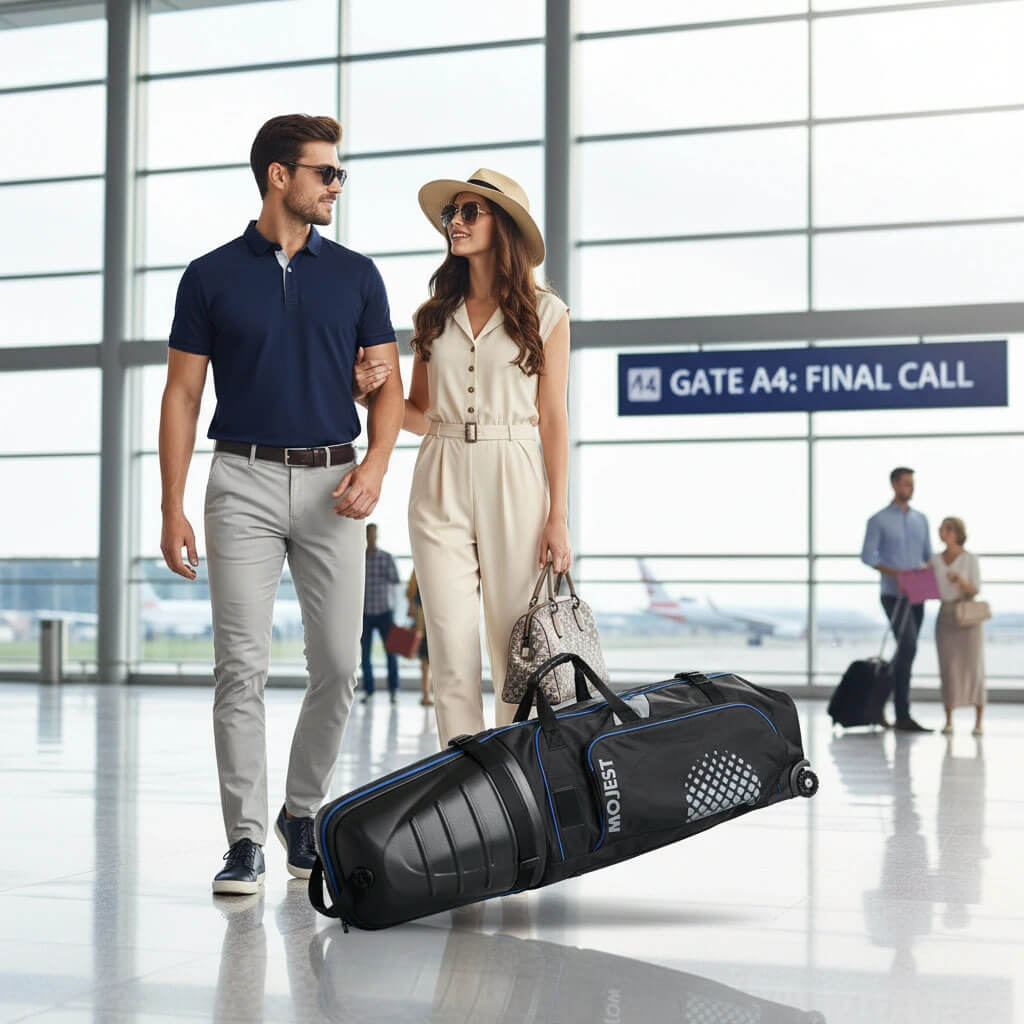
Quick Take: What Actually Matters Before You Fly With Clubs
Choosing a golf travel bag comes down to one trade-off: protection versus weight and bulk. Hard-top designs shield your club heads best, but they cost more and fold down less compactly. Soft-sided bags are lighter and cheaper, but owners more often report punctures or seam wear after several flights.
If you fly with clubs once or twice a year, a budget soft-sided golf travel bag is usually enough. If you check clubs several times a season, the added cost of a hard-top or rolling-leg design tends to pay for itself in fewer damaged heads and fewer replacement bags. The comparison table below breaks down the first five options by material, price, and where each one falls short.
One consistent thread across owner feedback: no bag in this guide is damage-proof. Even premium rolling-leg bags picked up small rips after repeated flights, and even budget bags survived fine for golfers who only travel occasionally. Frequency of use matters as much as price.

How We Put This Comparison Together
This guide is built from manufacturer specifications and listing details for each bag, cross-checked against patterns in verified owner feedback. We did not physically test every bag ourselves. Instead, we looked for recurring praise, recurring complaints, and real-world use cases that the product listings don’t mention.
We weighed four things for every bag: club and head protection, ease of moving it through an airport, how much it holds beyond just your clubs, and what owners say breaks or wears out first. Where owner reports conflicted, we noted the disagreement instead of picking a side.
Five Options Side by Side
These are the first five bags in this guide, compared on material, price, and where each one is strongest and weakest.
| Product | Suited For | Top / Body Material | Price | Main Advantage | Main Limitation |
|---|---|---|---|---|---|
| Himal Outdoors Soft-Sided | Occasional flyers, road trips | 600D polyester Oxford | $49.99 | Lowest entry price with wheels and handles | Owners report small wheel-area punctures after repeated flights |
| DAREKUKU with Detachable Strap | Budget buyers who want a backup carry option | 900D Oxford | $39.99 | Rolls or carries on a shoulder strap; folds flat | Interior lining reported thinner than the outer shell |
| Hard Case Top, Black & Blue | Mid-price hard-top protection | ABS top + 1680D nylon | $119.99 | Rigid top guards club heads from crushing | May not fit cart-bag tops over 11 inches wide |
| Hard Case Top, Wear-Resistant | Full-length clubs up to 50 inches | ABS top + 1680D nylon | $103.99 | Accommodates longer clubs than most hard-tops here | Cart-bag tops over 10 inches wide may not fit |
| GEAVOUED Hard Case Top | Simple hard-top protection, fewer add-ons | Hard case top + Oxford fabric | $103.49 | Interior and exterior buckles add a second closure layer | Fewer long-term owner reports than other picks here |
BestiPro may earn a commission from qualifying purchases made through links on this page, at no additional cost to you.
Hard Shell, Soft Side, or Somewhere In Between
The biggest decision isn’t a brand. It’s the construction type. Each one trades protection against weight, price, and how small the bag folds down.
- Fully soft-sided: Lightest and cheapest. Relies on padding and internal straps rather than a rigid shell. Best for golfers who drive more than they fly.
- Hard-top hybrid: A rigid ABS or plastic shell over the club heads, with a soft-sided body below. This is the middle ground most of the bags in this guide use.
- Rolling-leg systems: Retractable legs that support the bag’s full weight so you can roll it with one or two fingers. Premium priced, and the extra cost mostly buys maneuverability, not extra armor.
Fabric weight matters too. Listings describe density in “denier” (D), and higher numbers generally mean a tougher, heavier fabric. The bags here range from 600D up to 1800D. A heavier denier doesn’t guarantee zero damage, but it does correlate with fewer owner-reported tears in this comparison.
Matching a Bag to How Often You Actually Fly
Your travel frequency should drive this purchase more than any single spec. A bag that’s perfect for one golf trip a year can be the wrong choice for someone checking clubs every month.
- Measure your cart bag’s top diameter first. Several hard-top bags in this guide cap out around 10 to 11.8 inches. An oversized stand bag simply won’t zip closed in some of them.
- Decide if you need a damage guarantee. Two bags here include a manufacturer replacement policy that explicitly covers airline mishandling. That’s worth factoring into the price difference.
- Think about storage at home. Hard-top hybrids fold smaller than rolling-leg systems, but bulkier padded covers like the Constrictor take up more closet space.
- Plan for shoes and extras separately if space is tight. If your bag’s side pockets run small, a dedicated gym bag with a shoe compartment keeps golf shoes out of your main suitcase entirely.
Use this quick checklist before you buy:
- Confirm your cart or stand bag’s top width against the bag’s stated maximum.
- Weigh your fully packed golf bag, not just an empty estimate.
- Check whether a damage or replacement policy is included.
- Decide if you need a shoulder strap option for stairs or shuttles.
1. Himal Outdoors Soft-Sided Golf Travel Bag — Budget-Friendly Choice
Price: $49.99
This is the least expensive bag in the lineup, built from 600D polyester Oxford fabric with a universal 13 x 15 x 50-inch interior. It comes with wheels, carrying handles, and a padded top cushion. Owners consistently describe it as a solid choice for the price, especially for golfers who don’t fly with clubs often.
What the listing doesn’t fully tell you
Several owners report small punctures near the wheel area after just one round trip. A separate group notes that the legs of a stand bag can rub a hole in the interior fabric over repeated use. Wrapping the legs in a towel or adding tape reinforcement inside the base addresses both issues.
- Pros: Lowest price point in this guide; fits a full set plus shoes and extras; multiple owners report clubs arriving undamaged on road trips and occasional flights.
- Cons: Small punctures near the wheels are a recurring owner complaint; no reinforcement where stand-bag legs rest against the fabric; limited color options.
This bag suits golfers who drive to most tournaments and fly only occasionally. Frequent flyers who check clubs many times a year will likely get more mileage out of a heavier-denier or hard-top option later in this guide.
2. DAREKUKU Golf Travel Cover with Detachable Shoulder Strap — Two Carrying Options
Price: $39.99
Built from 900D heavy-duty Oxford fabric, this cover rolls on wheels or carries via a detachable, adjustable shoulder strap. A front zip pocket holds shoes, a rangefinder, or a change of clothes, and a top card pocket keeps a boarding pass within reach. Owners frequently describe it as sturdier than expected for the price, including one report of the bag surviving two six-hour flights without a scratch.
Details the manufacturer leaves out
The exterior shoe pocket comfortably fits close to a men’s size 11 shoe. Anything larger typically needs to go inside the main compartment alongside the clubs instead. One owner also reported that the pink colorway held up worse on a flight than the black version they compared it to, though this appears to be an isolated report rather than a confirmed pattern.
- Pros: Two carrying modes; folds compact for storage; front and top pockets keep travel documents and shoes organized; multiple owners report zero damage across several flights.
- Cons: One owner reported a rip in the interior lining after a single flight; wheels described as slightly small by one reviewer, causing occasional drag.
This bag fits golfers who want a shoulder-strap backup for stairs or shuttle buses. It’s not the right pick if you specifically want a rigid top over your club heads, since the entire design is soft-sided.
3. Golf Travel Bag with Hard Case Top, 1680D Oxford (Black & Blue) — Extra Impact Protection
Price: $119.99
This bag pairs a hard ABS shell top with a 1680D ballistic nylon body and a thickened cushion layer. Off-road wheels and a reinforced top handle are built for heavier loads, and the 52-inch interior fits a full cart bag plus a separate shoe bag. Owner feedback here is more mixed than average: some describe the bag surviving many trips without issue, while others report a torn seam or rip after a single flight.
A few real-world things the listing doesn’t mention
The listing notes the bag may not fit if your cart bag’s top divider is wider than 11 inches, which is worth measuring before you order. One owner also reported the top carrying strap detaching within seconds of first use, and the wheels don’t swivel, so dragging the bag before rotating it into the correct position can scuff the base.
- Pros: Rigid top shields club heads from crushing; roomy enough for a cart bag and a separate shoe bag; reinforced handle for heavier loads.
- Cons: Seam and rip reports from a subset of owners after limited use; top strap reported as fragile by one reviewer; wheels don’t swivel.
This bag works for golfers who want hard-top protection and don’t mind the added bulk when folded. If you have an oversized cart bag or want a bag with a stronger consistent durability track record, weigh it against the OutdoorMaster option later in this guide.
4. Golf Travel Bag with Hard Case Top, 1680D Wear-Resistant — For Full-Length Clubs
Price: $103.99
This bag shares the ABS hard-top and 1680D nylon combination with the previous entry, but it’s built for clubs up to 50 inches and cart bags up to 10 inches in diameter. A thick cushion layer, riveted rubber handles, and a compact fold when not in use round out the design. Owners generally describe it as sturdy and well organized for a mid-range price.
What becomes clear only after looking closer
One owner noted that a driver may not fit fully inside without removing the head first. Since most modern drivers and fairway woods have removable heads, several reviewers across this guide recommend detaching them before closing the bag, which sidesteps this length limitation entirely.
- Pros: Accommodates clubs up to 50 inches; hard top and thick cushioning protect club heads; folds down small for storage.
- Cons: Cart bags over 10 inches in diameter may not fit; a driver with the head attached can be a tight squeeze.
This is a solid fit for golfers with a standard-size cart bag who want hard-top protection and a small folded footprint. Owners of oversized staff bags should measure carefully before ordering.
5. GEAVOUED Golf Travel Bag with Hard Case Top — Simple, No-Fuss Protection
Price: $103.49
This bag combines a hard case top with Oxford fabric and adds interior and exterior buckles alongside heavy-duty zippers for a tighter seal against shifting. It has room for clubs, balls, tees, and extra clothing, and folds for storage when not in use. Owner feedback is positive but limited in volume compared with some other bags in this guide.
- Pros: Hard top plus a buckle-and-zipper closure for extra security; ample room for clubs and accessories; folds for storage.
- Cons: Fewer verified long-term owner reports are available, so multi-year durability is harder to confirm than with higher-volume listings in this guide.
This bag is a reasonable fit if you want straightforward hard-top protection without extra features to weigh against each other. Shoppers who prefer to lean on a longer track record of owner feedback may want to compare it against the OutdoorMaster or CaddyDaddy options below first.
6. Partage Golf Travel Bag with Wheels — For Maximum Interior Space
Price: $72.99
Made from 900D Oxford fabric with a 210D interior lining and 0.7-inch top padding, this bag offers one of the largest interiors in this guide at 51 x 12.5 x 18 inches. It rolls on 4-inch tank-style wheels and closes with a number 10 zipper. Owners describe it as tough and well made, with easy loading into a car.
What the listing doesn’t fully tell you
One detailed owner review notes the bag doesn’t stand upright on its own when empty. Loading your golf bag inside first gives it the structure to stay standing, so plan to pack it before setting it up in a hallway or hotel room.
- Pros: Generous interior space; padded top for club-head protection; sturdy tank wheels for rolling over uneven surfaces.
- Cons: Doesn’t stand upright when empty; fewer standout premium features compared with higher-priced bags in this guide.
This bag suits golfers who want generous packing space at a mid-range price. It’s less ideal if you need the empty case to stand on its own for staging at home.
7. CADDYDADDY Constrictor Golf Travel Bag Cover — For Buyers Who Want a Damage Warranty
Price: $149.95
Built from 1800D fabric, roughly three times the thickness of a 600D bag, this cover includes external and internal cinch straps, riveted rubber handles, lockable zippers, and inline skate wheels. CaddyDaddy backs it with a one-year full replacement policy that explicitly covers damage caused by airline mishandling, backed by a US-based customer service team. Owners consistently cite this warranty as a reason they chose the brand.
What the listing doesn’t fully tell you
The bag is bulkier than hard-top folding designs when not in use, since it doesn’t collapse as flat. One long-time owner also recommends adding extra straps, noting the factory strap connectors felt lower quality than the rest of the bag’s construction.
- Pros: One-year replacement policy that explicitly covers airline damage; sturdy 1800D fabric; lockable zippers and riveted handles.
- Cons: Bulkier for storage than folding hard-top designs; zippers can feel stiff before they break in; strap connectors flagged as a weak point by one owner.
This bag is a strong match for golfers who prioritize a documented damage-replacement policy over a fully collapsible hard shell. It’s a less convenient pick if closet or trunk space is tight.
8. Sun Mountain ClubGlider Meridian — For Frequent Flyers Who Want to Roll, Not Carry
Price: $349.99
The Meridian uses a four-wheel retractable-leg system that supports the bag’s full weight, so you’re pushing rather than lifting. It offers 120.4 liters of capacity, measures 52 x 14 x 14 inches internally, and weighs 11.3 pounds empty. Dense foam padding runs across the top, and two-way zippers span the full length of the bag. Owners describe it as remarkably easy to maneuver, with several specifically mentioning it moves with one finger.
What the listing doesn’t fully tell you
The retractable-leg system means most of the premium here goes toward maneuverability rather than added armor. One owner reported small rips developing in the rubber-backed section after roughly two round trips, which is worth watching if you check clubs frequently.
- Pros: Rolls with minimal effort thanks to the four-wheel leg system; generous 120.4-liter capacity; reinforced high-wear areas.
- Cons: Highest price in this guide; one owner reported small rips after repeated round trips.
This bag fits frequent flyers who value effortless rolling through large airports and are willing to pay for it. Golfers on a tighter budget, or anyone prioritizing maximum impact protection, may be better served by a hard-top option earlier in this guide.
9. FIRED-UP Hard Top Golf Travel Bag — Budget-Minded Hard-Top Option
Price: $134.95
This bag pairs a hard shell top with 1680D water-resistant nylon, an internal strap for stability, and a heavy-duty zipper. It’s designed to collapse for storage when not traveling. Owners generally describe it as rugged and roomy, though experiences with the storage and durability were mixed.
What the listing doesn’t fully tell you
Several owners found the folding process unclear without instructions, though the manufacturer sent a how-to video after being contacted directly. One owner also reported a broken driver and a crushed bag after a second flight, despite the “tuff” marketing language on the listing.
- Pros: Hard shell top with water-resistant 1680D nylon; internal strap keeps clubs stable; collapsible for storage.
- Cons: Folding instructions aren’t included out of the box; at least one report of damage after limited use.
This bag works for golfers who want hard-top protection and don’t mind a small learning curve on folding it correctly. It’s a weaker fit if you want a bag you can fold right the first time without contacting support.
10. OutdoorMaster Golf Travel Bag — For Long-Term Reliability
Price: $139.99
This bag combines an ABS hard shell top with 1680D ballistic nylon, in-line skate wheels, and a 49.6-inch interior. It includes a shoulder strap and multiple handles for different carrying conditions. Several owners specifically report using this bag across six or more separate flight segments with zero wear and tear, which is a stronger multi-flight track record than most other bags in this guide.
What the listing doesn’t fully tell you
One owner felt the bag “could be bigger” once a cart bag and golf shoes were both packed in, with shoes needing to be wedged between clubs. Long-term owners specifically mention checking this bag on United, American, and Delta without issue, which is useful context if you’re weighing it against a specific airline’s baggage policy.
- Pros: Strong multi-flight track record among owners; hard top plus 1680D nylon for impact protection; shoulder strap and multiple handles.
- Cons: Interior space runs tight once a cart bag and shoes are both packed; cart-bag tops over roughly 11.8 inches wide may not fit.
This bag is a strong fit for golfers who want a proven multi-flight history behind their purchase. Owners of oversized cart bags should double-check the stated diameter limit first.
11. CaddyDaddy Enforcer Golf Travel Bag — Maximum Crush Protection
Price: $199.95
The Enforcer uses 1800D fabric with an ABS molded hard top and measures 51 x 13 x 13 inches. It includes oversized off-road skate wheels, two large shoe pockets, and lockable zippers. CaddyDaddy backs it with an 18-month full replacement policy that also covers airline mishandling, the longest guarantee window in this guide.
What the listing doesn’t fully tell you
One detailed owner review describes the top carrying handle as uncomfortable under load, since the hard plastic edge and zipper dig into the hand. That owner fixed it by wrapping the handle in rope and tubing for extra padding, a modification worth considering if you plan to lift and carry rather than roll.
- Pros: Longest manufacturer replacement window in this guide, including airline damage; ABS molded hard top; two large shoe pockets.
- Cons: Top carrying handle reported as uncomfortable under load by one owner without a handle modification.
This bag suits golfers who want the longest replacement window here and don’t mind rolling rather than carrying. If you expect to lift the loaded bag by the top handle often, plan on adding your own grip padding.
12. Sun Mountain ClubGlider Journey — Compact, Lightweight Rolling Option
Price: $299.99
The Journey uses patented extendable and retractable legs that support the bag’s full weight, paired with swiveling front wheels and heavy-duty ballistic-style nylon. Three utility handles round out the design. Owners repeatedly describe moving this bag with one or two fingers, even fully loaded, and several specifically call it easier to steer than their own carry-on luggage.
What the listing doesn’t fully tell you
Like the Meridian above, most of the premium here goes toward the rolling mechanism rather than added armor. Owners consistently praise the glide more consistently than they praise impact protection compared with hard-top designs. One short review reported a broken club head on the first trip, though without further detail on the cause.
- Pros: Swiveling wheels and retractable legs make it exceptionally easy to steer; lighter and more compact than the Meridian; three utility handles for flexible carrying.
- Cons: Priced well above the soft-sided options in this guide; one report of a damaged club head with no further detail; a soft-sided body means less rigid protection than a hard-top design.
This bag is a good match for frequent travelers who want the lightest, most maneuverable rolling experience here. Buyers who prioritize crush protection above all else may prefer a hard-top design instead.
The Weight Math Nobody Puts on the Product Page
Most major U.S. airlines cap a standard checked bag at 50 pounds before charging an overweight fee, and international carriers are sometimes stricter, closer to 44 pounds. That limit includes the travel bag itself, your golf bag, your clubs, and anything else you pack inside.
Owners in this comparison who mentioned actual weights reported fully loaded bags in the mid-30s to mid-40s in pounds, including clubs, shoes, and extra clothing. That leaves some room under the 50-pound line, but not much once you add a rain suit, extra layers, or a second pair of shoes.
Weigh your packed bag at home with a bathroom or luggage scale before heading to the airport. It’s a five-minute step that avoids a surprise fee at check-in. If you’re settling in for a long flight after checking your clubs, a good travel pillow makes the wait more comfortable, and packing valuables in a separate travel backpack keeps them with you instead of in the hold.
Where These Bags Actually Wear Out First
Across the owner feedback in this guide, damage doesn’t show up randomly. It clusters around a few predictable spots, and knowing them ahead of time can help you pack smarter or pick a more reinforced design.
- Near the wheels on budget soft-sided bags. Lower-denier fabric in this area saw the most puncture reports, likely from friction against conveyor belts and baggage carts.
- Strap connectors on padded covers. One long-time owner of a heavier-duty cover specifically flagged the plastic strap connectors as weaker than the surrounding fabric.
- Top carrying handles on hard-shell bags. A rigid handle edge meeting a zipper track was reported as uncomfortable, and occasionally as a point of wear, on more than one hard-top design.
- Seams on a subset of hard-top bags after a single flight. This wasn’t universal, but it showed up often enough across different owners to be worth noting rather than dismissing as one-off bad luck.
None of this means a bag is defective. It means padding, wrapping clubs in a towel, and removing club heads where possible all still matter, regardless of how much you spend on the bag itself.
Frequently Asked Questions
Are hard-case or soft-sided golf travel bags better protection for flights?
Hard-top designs add rigid protection right where club heads sit, and several owners specifically credit that shell with preventing damage. Soft-sided bags are lighter and fold flatter, but owners more often report punctures or seam wear after repeated flights. If you check clubs several times a year, a hard-top or hybrid design is generally the safer bet.
What if my cart bag doesn’t fit inside a golf travel bag?
Several bags in this comparison state a maximum top-divider width, usually between 10 and 11.8 inches. Measure your cart or stand bag’s widest point before ordering, especially if you use an oversized bag. Choosing a model rated for a slightly larger diameter than you think you need helps avoid a return.
Can I fit my driver without removing the club head?
Most modern drivers and fairway woods have removable heads, and several owners in this comparison recommend detaching them before closing the bag. This shortens the packed length and reduces pressure on the club during handling. Check your bag’s stated maximum club length first if you’d rather leave heads attached.
Do any of these bags cover damage caused by the airline?
The CaddyDaddy Constrictor and CaddyDaddy Enforcer both include a manufacturer replacement policy that explicitly covers airline mishandling. The other bags in this guide rely on padding and hard-top construction alone, without a stated damage guarantee. If a replacement policy matters to you, that’s a meaningful difference to factor into the price.
How much weight can I pack before hitting the airline limit?
Most major U.S. airlines cap a standard checked bag at 50 pounds before an overweight fee applies, and international carriers can be stricter. Owners in this guide report fully loaded bags, including clubs, shoes, and clothing, typically landing in the mid-30s to mid-40s in pounds. Weighing your packed bag at home avoids a surprise at the counter.
The Editorial Approach Behind This Comparison
This guide was put together by Iman Dehghani Firoozabadi for BestiPro. The evaluation approach relies on manufacturer specifications and listing details for each bag, cross-checked against patterns found in verified owner feedback rather than a single individual’s opinion.
Where owner reports disagreed, that disagreement is noted directly in the review rather than smoothed over. Manufacturer marketing claims, supplied product specifications, and owner-reported experiences are treated as three separate types of evidence throughout this guide, not blended together as a single verdict. If you’re headed to the course on a business trip, a well-organized laptop bag for business travel pairs well with any of the golf bags above for the rest of your itinerary.
Resources
For current checked-baggage size and weight rules by airline, see U.S. News & World Report’s checked luggage guide. Airline policies can change, so it’s worth confirming directly with your carrier before a trip.
Choosing the Golf Travel Bag That Matches Your Next Trip
If you fly with clubs occasionally, the Himal Outdoors or DAREKUKU covers offer real protection without a big outlay. If you check clubs several times a season, a hard-top hybrid like the OutdoorMaster or CaddyDaddy Enforcer gives you a stronger track record and, in the Enforcer’s case, a longer replacement window. If airport distance and effort matter most to you, the Sun Mountain ClubGlider bags are the standout for rolling ease, at a premium price.
No bag here is damage-proof, and owner reports across every price point include at least one report of a rip, a broken part, or an uncomfortable handle. Measuring your cart bag, weighing your packed case, and matching the bag to how often you actually fly will do more for your clubs than chasing the single “toughest” spec on a listing.
Ready to compare prices directly? Start with whichever option above matches your travel frequency, then check current availability before you book your next trip.
Affiliate disclosure: BestiPro may earn a commission when you buy through links on this page. This does not change the price you pay or the editorial criteria used in this guide.