
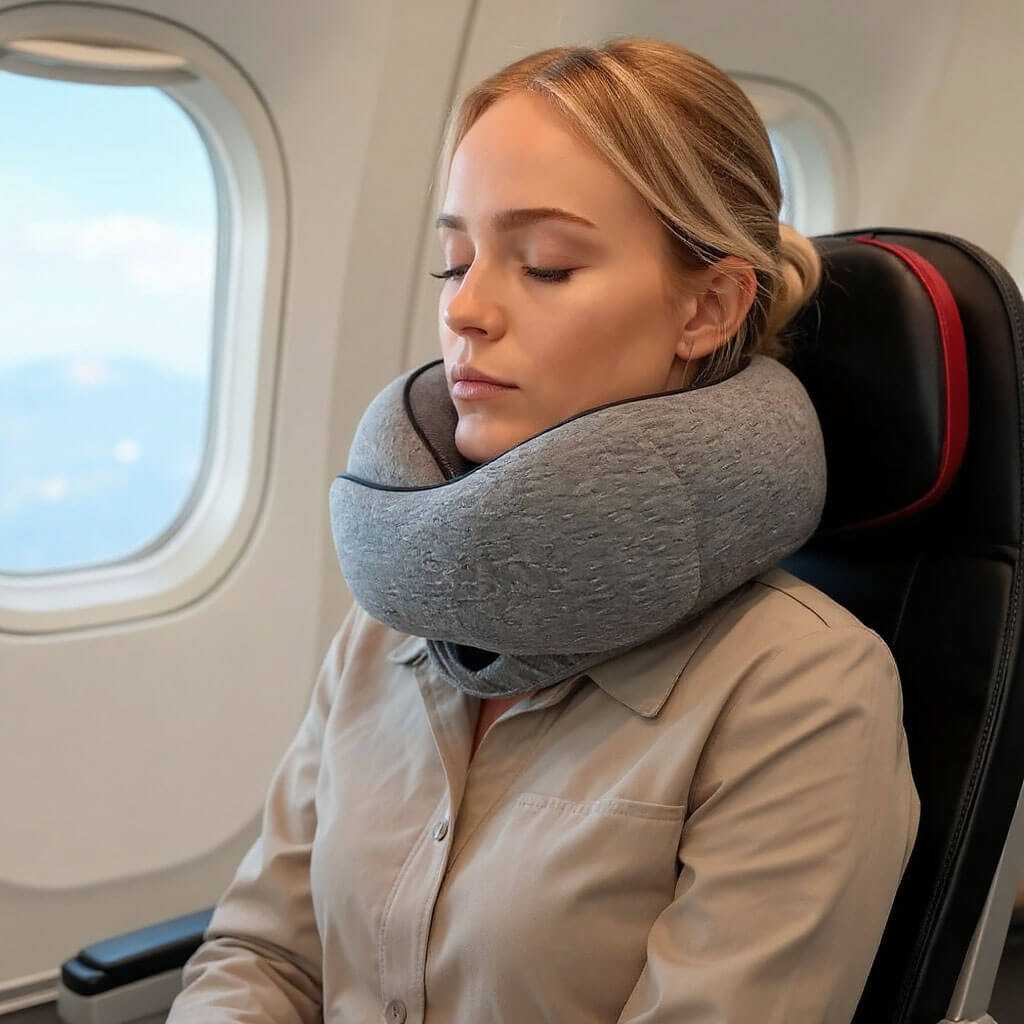
Most travel pillows fail for one simple reason: they look supportive in product photos, then let your head slump the moment you doze off. For 2026, the better options split into a few distinct camps: classic memory foam U-shapes, chin-support-first designs, wraparound styles, and compact alternatives that trade plushness for portability. Based on product specs, buyer feedback patterns, category benchmarks, and comparable models, the standout pick here is the Cabeau Evolution S3 for long-haul flyers who care more about real support than bargain pricing.
- Main winner: Cabeau Evolution S3, because the seat-strap system tackles the biggest in-flight problem: head bobbing.
- Best use-case pick: Trtl Pillow if you hate bulky U-shaped pillows and want something very compact.
- Biggest buying warning: a thick pillow behind the neck can push your head forward and make you less comfortable, not more.
- Who should skip this category: if you only take short flights and never sleep sitting upright, a full neck pillow may be overkill compared with lighter packable backpack space savings.
Quick Picks at a Glance: Best Travel Pillow Options
| Rank | Product | Best For | Price Range | Buy Link |
|---|---|---|---|---|
| 1 | Napfun Neck Pillow | Budget-minded flyers wanting basic chin support | $ | Check Amazon Price |
| 2 | Dot&Dot Twist Memory Foam | Travelers who want one pillow for neck, lumbar, or shoulder support | $$ | Check Amazon Price |
| 3 | Gosider Neck Pillow | Cheap backup pillow for occasional trips | $ | Check Amazon Price |
| 4 | Cabeau Evolution S3 | Long flights and upright sleepers who need serious support | $$$ | Check Amazon Price |
| 5 | MLVOC Neck Pillow | Value shoppers who want a full flight sleep kit | $$ | Check Amazon Price |
What We Looked At Instead of Trusting Marketing Photos
No hands-on testing notes were provided for this roundup, so this comparison is based on product specs, design logic, buyer feedback patterns common to the category, pricing context, washability, portability, and how each pillow’s shape addresses the real problem of sleeping on a plane without your head collapsing forward.
For travel pillows, the criteria that matter most are fairly specific:
- Forward-fall control: Does it actually stop chin drop, or just cushion the neck?
- Side-sleep compatibility: Some people lean into the window; others drift toward the aisle.
- Back profile: A bulky rear section can force your neck into an awkward angle.
- Packability: A pillow can be supportive and still be annoying if it hogs half your carry-on.
- Cover practicality: Machine-washable covers matter more than brands admit, especially on repeat flights.
- Value discipline: Travel pillows are notorious for inflated claims, so price has to match the design advantage.
That matters even more if you’re already optimizing cabin space with a travel day backpack or trimming extras for a lighter personal-item setup.
The Reviewed Options, in Input Order
1. Napfun Neck Pillow for Traveling — a low-cost memory foam pick that gets the basics right

The napfun sits squarely in the “better than the airport gift-shop pillow” lane. It uses the familiar raised-lobe memory foam formula, plus an adjustable drawstring to tighten the fit around the chin and neck. That won’t magically turn it into a premium ergonomic travel neck pillow, but it does give it more usefulness than a floppy generic U-shaped pillow.
Who it suits: occasional flyers, budget travelers, and anyone who wants basic support without overthinking the category.
Where it falls short: the design is still fairly standard, so if you struggle badly with head bobbing on long-haul flights, you may outgrow it quickly.
- Price: $15.86
- Fill: memory foam
- Standout detail: adjustable drawstring fit
- Use cases: plane, car, train, bus
Worth knowing: This is the kind of pillow that makes sense if you’re building an inexpensive flight comfort kit and pairing it with a travel water bottle, eye mask, and layers rather than spending heavily on one accessory.
2. Dot&Dot Twist Memory Foam Travel Pillow — the flexible oddball that solves different problems
Not everyone needs a classic airplane neck pillow. The Dot&Dot twist design is more like a support roll you can bend around the neck, shoulder, lower back, or even a seatbelt area. That makes it unusually versatile. It’s one of the few options here that can pull double duty after the trip instead of living in a closet between flights.
That same flexibility is also its limitation. A custom-shape pillow sounds smart, but in a cramped airplane seat, some travelers simply do better with a purpose-built structure that tells the head where to rest.
- Best for: people who want one travel pillow for planes, cars, and lumbar support
- Not ideal for: travelers who want instant, obvious chin support with no setup
- Main difference: more adaptable than a U-shape, less locked-in than a support brace
Practical note: if you switch between air travel and road trips often, this kind of bendable pillow can be more useful than buying a dedicated flight-only model.
3. Gosider Neck Pillow — cheap, straightforward, and probably fine for light use
At this price, the Gosider doesn’t need to be brilliant. It just needs to be competent. You get a standard memory foam U-shape, enlarged side support, a soft velvet cover, and a hanging buckle for attaching it to luggage. For occasional travel, that may be enough.
The caution here is simple: there’s not much in the provided detail that separates it meaningfully from the budget pack. When travel pillows get this inexpensive, the shape quality and foam resilience matter a lot more than feature lists.
- Best for: infrequent trips and backup use
- Weakness: limited evidence of standout neck geometry
- What sets it apart: mainly price, not innovation
4. Cabeau Evolution S3 — the one that makes the strongest case for long-haul flights
This is the pillow in the lineup that most clearly tries to solve the real biomechanics of airplane sleep rather than merely adding cushion. The seat-strap system is the headline feature, and it matters. Most people don’t wake up from a red-eye because the fabric felt cheap; they wake up because their head keeps snapping off position. Securing the pillow to the seat directly addresses that.
The dual-density memory foam, raised side wings, chin clasp, moisture-wicking cover, and compressible carry case all point to a product designed by people who know the category’s usual failures. It’s also one of the few pillows here that looks equally plausible for side leaners and upright sleepers.
- Best for: frequent flyers, long-haul trips, neck pain prevention, and serious plane sleeping
- Not ideal for: ultra-light packers or anyone who hates structured foam around the neck
- Why it stands apart: the seat attachment system is a more meaningful advantage than most “premium” travel pillow claims
- Price: $39.99
Before you buy: this is one of the best travel pillow choices here if your trip includes overnight segments and you’re already planning other long haul flight essentials. If your flights are short and you rarely sleep upright, it may be more pillow than you need.
Editorial verdict: If you want the strongest all-around answer to “what’s the best neck pillow for sleeping on plane seats?”, this is the one I’d lean toward first.
5. MLVOC Neck Pillow — value-heavy and easy to recommend to first-time buyers
MLVOC plays the bundle game well. You’re not just buying a memory foam travel pillow; you’re getting the common long-flight extras too: eye mask, earplugs, carry bag. That immediately makes it appealing for travelers who want one click and done.
The actual pillow design is familiar: contoured memory foam, adjustable rope lock, washable cover, compressible storage. Nothing wildly original, but it’s a sensible package. For many buyers, that’s enough. The caveat is that bundled accessories can distract from the core question of whether the neck support itself is meaningfully better than cheaper near-clones.
- Best for: travelers buying a full comfort kit on a moderate budget
- Falls short when: you need more advanced anti-bob support than a standard curved pillow can offer
- Different from nearby alternatives: stronger all-in-one value than napfun or ExploreBliss
Buying note: If you don’t already own an eye mask or earplugs, the bundle has real value. If you do, compare it mainly on pillow shape, not the extras.
6. EverSnug Travel Blanket and Pillow — useful travel comfort gear, but not really a neck pillow replacement
This one belongs in the article because many shoppers searching for the best airplane pillow are really trying to solve a broader comfort problem. EverSnug gives you a soft travel blanket and a carry case that can double as a pillow. That’s genuinely useful on cold flights or in airports.
Still, it’s important not to confuse warmth with support. If your main issue is neck pain or your head dropping forward while sleeping on a plane, this won’t solve it the way an ergonomic travel pillow can.
- Best for: cold cabins, airport waiting, road trips, and comfort layering
- Not ideal for: travelers specifically needing chin or cervical support
- Main strength: 2-in-1 convenience and cozy fabric
- Main weakness: weak answer to upright sleep posture
It makes more sense as a companion item in a personal item or mini backpack than as your only sleep accessory.
7. BUYUE Travel Neck Pillow — more structure up front, which some sleepers will love
BUYUE’s “Q-shaped” triple-support concept is trying to improve on the classic U-shape by giving you configurable front and side support. That’s smart in theory because many travel pillows aren’t aggressive enough where they need to be: under the chin and around the jawline.
The appeal here is adjustability in resting position, plus the included kit and washable cover. The possible downside is bulk and fit complexity. Travelers who want something quick, simple, and low-fuss may prefer a more conventional memory foam model or a wrap style.
- Best for: upright nappers who want a more assertive front-support shape
- Not ideal for: minimalist travelers or petite users worried about overbuilt pillows
- Key attributes: triple-support structure, memory foam, washable cover, included accessories
Watch out: support-first designs can feel excellent to one traveler and overly enclosing to another. This is the kind of pillow where your tolerance for structure matters as much as the spec sheet.
8. Trtl Pillow — the compact cult favorite that breaks the usual travel pillow formula
The Trtl is not a plush pillow in the normal sense. It’s a wraparound fleece support with an internal brace that keeps your head in a more upright position. That makes it one of the most distinctive options in the category and a legitimate answer for people who hate bulky memory foam horseshoes.
Its strength is obvious: it’s extremely lightweight and packable. If you travel with a tight personal-item setup or hate dangling gear from your bag, that matters. It also helps if your main priority is preventing neck collapse without carrying a thick pillow.
The tradeoff is equally obvious: some people love the brace-like support, while others find it less natural than cushioned memory foam. It’s more of a support system than a soft nest.
- Best for: carry-on minimalists, frequent flyers, and travelers seeking a Trtl pillow alternative style without classic bulk
- Not ideal for: anyone who wants plush, even pressure around the entire neck
- What makes it different: wraparound architecture rather than a standard U shaped pillow
If your packing style already revolves around compact gear like a clear crossbody bag for quick-access essentials or a tightly packed personal item, the Trtl’s space savings are a real selling point.
9. SAIREIDER Travel Pillow — a no-frills entry in the crowded budget field
SAIREIDER keeps the pitch simple: pure memory foam, adjustable sizing, removable washable cover, and classic all-around neck and chin support. At under ten dollars, there’s not much room for sophistication, but there may not need to be if your expectations are realistic.
The problem is comparison fatigue. There are many pillows in this exact lane, and without a distinctive geometry or support mechanism, this one is hard to single out unless price is your main filter.
- Best for: shoppers who just need a cheap, washable travel neck pillow
- Weak point: little evidence of superior design versus similar low-cost models
- Why choose it: price-first buying
10. FlyHugz Neck Travel Pillow — compact, support-focused, and aimed at upright sleep
FlyHugz tries to split the difference between a bulky foam pillow and a brace-like support system. The lightweight build, adjustable Velcro fit, and upright support emphasis suggest a product designed for people who care less about softness and more about arriving without neck strain.
The chin support angle is especially relevant for plane sleep, because open-mouth dozing and forward head drop are often the real sources of discomfort. That said, this sits at a fairly premium price for a product with less established category visibility than names like Cabeau, Trtl, or BCOZZY.
- Best for: travelers wanting compact support with more structure than a generic U-shape
- Not ideal for: bargain buyers or those who prefer fluffy, wraparound cushioning
- Standout: lightweight support-first positioning
Practical buying note: this is the sort of option worth considering if you’ve already tried cheap memory foam pillows and found them too bulky or too soft.
11. PEUJEW Small Shredded Memory Foam Pillow — better for camping and car naps than upright flights
Here’s the blunt version: this is not a serious competitor for best neck pillow for travel if your main concern is sleeping upright on a plane. It’s a small rectangular travel pillow, not an airplane neck support system.
That doesn’t make it bad. In fact, for camping, hammocks, car travel, or hotel backup use, it may be more comfortable than many neck pillows. Shredded memory foam can feel more familiar and forgiving than rigid travel-specific designs.
- Best for: campers, road trippers, and travelers wanting a small standard pillow feel
- Not ideal for: direct chin support or preventing sideways head drop in economy seats
- Main difference: versatility outside flights, weaker airplane specialization
12. ExploreBliss Travel Pillow — one of the better-priced bundled basics, but still a familiar formula
ExploreBliss offers the now-common memory foam pillow set: neck pillow, eye mask, earplugs, storage bag, removable cover. For a sub-$10 price, that’s undeniably attractive.
The shape and value proposition are close to many generic competitors, so the editorial case for it is less about uniqueness and more about whether you want a serviceable starter set without paying for premium branding. If that’s your goal, it fits.
- Best for: budget flyers assembling a low-cost flight kit
- Where it falls short: doesn’t appear to solve category pain points in a new way
- Closest comparison: MLVOC, but cheaper and likely less refined
13. BCOZZY Travel Neck Pillow — especially compelling if standard U-shapes push your head forward
BCOZZY has a clear and important design argument: many U-shaped travel pillows are too bulky at the back, which tilts the head awkwardly forward. Its flat-back design directly addresses that. For a lot of travelers, that’s not a small tweak. It’s the difference between tolerable and irritating.
The overlapping arms also make the BCOZZY more adaptable for chin support and side sleeping than a basic horseshoe pillow. It’s filled with down-alternative material rather than memory foam, which changes the feel. Some people will prefer the softer, more moldable response; others may want firmer structure.
- Best for: side sleepers, front-and-side leaners, and travelers who dislike thick rear support
- Not ideal for: buyers wanting the firmer hold of a structured memory foam design
- What makes it different: flat-back shape and overlapping support arms
Why it matters: if you’ve tried a standard airplane neck pillow and felt like it pushed your chin down or your head forward, BCOZZY is one of the smarter alternatives in this list.
What Actually Matters Before You Buy a Travel Pillow
Don’t start with memory foam versus inflatable. Start with how you fail to sleep.
- Your head drops forward: prioritize chin support, front overlap, or a support system like Cabeau, BCOZZY, BUYUE, or Trtl.
- You lean sideways into a window: taller side walls or a foldable design can help more than stiff front support.
- You hate neck bulk: skip thick rear-heavy U-shapes. BCOZZY’s flat-back logic or the Trtl approach makes more sense.
- You travel light: a compact pillow matters. A big plush model can be annoying if it competes with your headphones, layers, and packable backpack space.
- You run hot: breathable or washable covers matter more than brands let on, especially on long flights and summer trips.
- You have neck pain already: don’t assume cheaper memory foam is “basically the same.” Geometry matters far more than accessory bundles.
The most common buyer mistake is paying attention to softness before support. A soft pillow can feel nice for ten minutes and still be useless when you actually fall asleep. The second mistake is buying a thick U-shaped pillow without thinking about your seat posture. If the back panel pushes your head forward, comfort disappears fast.
As a rule, paying more is worth it when you fly often, take overnight routes, or consistently wake up with neck stiffness. If you only travel a few times a year, a decent washable budget model may be all you need.
Questions Buyers Usually Ask Before Clicking Buy
Is a memory foam travel pillow better than an inflatable one?
Usually, yes for comfort and stability. Inflatable pillows pack smaller, but memory foam tends to offer better shape retention and more consistent neck support.
What’s the best travel pillow for long flights?
For most buyers, the better choice is a pillow that controls head drop rather than just cushioning the neck. In this list, Cabeau Evolution S3 stands out most for long-haul use.
Are U-shaped pillows still the best option for sleeping on a plane?
Not always. They’re familiar, but many don’t stop forward head slump very well. Wraparound and chin-support designs can work better, especially for upright sleepers.
Which travel pillow works best for side sleepers?
It depends mostly on whether you lean toward a window or into open space. BCOZZY and Cabeau make more sense than plain low-profile U-shapes because they offer better side support logic.
Do expensive travel pillows really make a difference?
Yes, but only if the design solves a real problem. Paying more for better geometry, seat attachment, or compact support can be worth it. Paying more for branding alone usually isn’t.
What if I hate bulky pillows around my neck?
The Trtl is the obvious place to look. It’s much less bulky than traditional memory foam models, though the feel is more structured and less plush.
Should I buy a travel pillow with an eye mask and earplugs bundle?
If you don’t already own those items, bundled kits like MLVOC can be practical. If you do, focus on the pillow’s actual shape and support instead of the extras.
Where We’d Land After Sorting Through the Hype?
The Cabeau Evolution S3 is the best overall travel pillow in this group because it does the most to address upright sleep mechanics, not just softness. For travelers who care most about packability, the Trtl Pillow remains the more interesting alternative. And if you’ve been annoyed by rear-heavy U-shapes, BCOZZY is probably the smarter detour.
The mistake to avoid is buying the cheapest pillow that looks plush and assuming all neck support pillows work the same. They don’t. In this category, shape logic beats fluff every time.
BestiPro reviews travel gear with a comparison-first editorial approach, focusing on how product design, tradeoffs, portability, and real-use practicality affect buying decisions. For categories like flight accessories and sleep gear, we prioritize decision usefulness over marketing claims.
Affiliate disclosure: BestiPro may earn a commission when you buy through links on this page. This does not change the price you pay or the editorial criteria used in this guide.